Womens My Favorite People Call Me Mama Design Review
As a professional embroidery digitizer and product reviewer, I approach every new graphic with a specific question: will this actually stitch out well on a finished product? When evaluating the Womens My Favorite People Call Me Mama design, my focus shifts immediately from digital aesthetics to physical application. This phrase carries significant emotional weight for mothers, making it a staple in the personalized gift and custom apparel markets. However, sentiment alone does not guarantee a successful embroidery project. The transition from a digital cutting file or graphic to a tangible machine embroidery design requires careful consideration of stitch types, fabric compatibility, and commercial viability for Etsy sellers and small business owners.
Evaluating Visual Hierarchy and Stitch Translation
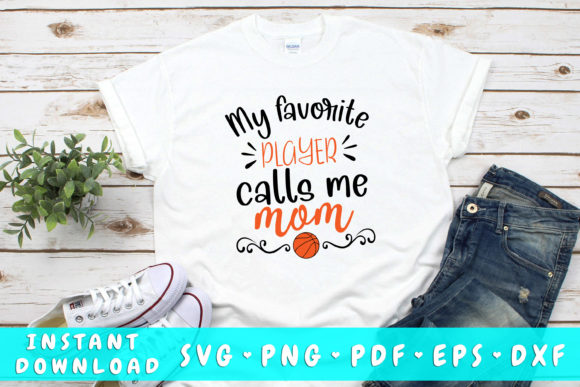
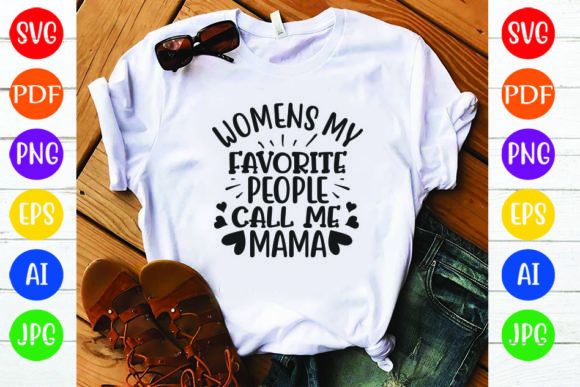
My first impression of this design centers on its typographic balance. For a text-based motif like "My Favorite People Call Me Mama," the legibility is paramount. In the world of Graphics and Crafts, a font might look elegant on a screen, but as an embroidery file, it must withstand the physics of thread and tension. I am looking for clean lines that translate well into either satin stitch or fill stitch without becoming muddy. If the lettering is too thin, it risks disappearing into textured fabrics; if it is too thick, it can create a bulletproof patch effect that distorts stretchy knits.
When reviewing this specific layout, I consider how the words stack. A centered, balanced composition usually performs best for sweatshirt embroidery and tote bag design. The visual personality should feel warm and approachable rather than rigid. For a handmade product intended as a Mother’s Day or holiday gift, the stitching needs to reflect that softness. I always advise checking whether the design includes adequate spacing between letters. Tight kerning is a common failure point in machine embroidery design, leading to thread breaks and poor registration when scaled down for baby embroidery or sleeve cuffs.
Real-World Application: The Custom Sweatshirt Test
To truly judge the utility of Womens My Favorite People Call Me Mama, I mentally place it in a real-life production scenario. Let’s assume I am fulfilling a custom order for a boutique shop specializing in mom merchandise. The client wants a crewneck sweatshirt. This is a high-stakes application because sweatshirts are often washed frequently and worn casually, meaning the embroidery must be durable yet comfortable.
In this context, I would treat this as a potential applique design or a medium-density fill stitch project. Using a heavy satin stitch across the entire phrase on fleece could result in a stiff, uncomfortable chest panel. Instead, I look for versatility in the digital embroidery file. Does it allow for a running stitch outline that pairs well with floral accents? Or perhaps a mix of textures where "Mama" is highlighted in a bolder stitch while the supporting text remains lighter? This variation in stitch density not only improves the tactile feel of the custom apparel but also adds perceived value. Customers recognize quality when they see thoughtful texture contrast rather than a flat block of thread.
For an Etsy seller, this design serves as excellent anchor content for printable mockups. Because the phrase is universally understood, it allows buyers to instantly visualize the finished product. However, as a maker, you must ensure the actual stitch-out matches the promise of the digital preview. I recommend testing the design on a scrap piece of similar fleece or French terry before committing to the final garment. Verify that the stabilizer choice prevents puckering, as this is the most common complaint in commercial embroidery reviews regarding text-heavy designs.
Navigating Fabric Limitations and Hoop Constraints
While Womens My Favorite People Call Me Mama is versatile, it demands respect for material limitations. Not every fabric is a suitable canvas for this level of detail. I urge crafters and apparel decorators to exercise caution when applying this to performance wear, ribbed knits, or loosely woven linens. These fabrics shift under the needle, and unless the embroidery file has been specifically digitized with compensation for stretch, the letters may misalign.
Hoop size is another critical factor. This phrase contains five distinct words. Trying to compress this into a 4x4 hoop size often results in illegible text or excessive jump stitches. If you are working with smaller hoops, consider splitting the design or opting for a simplified version. Conversely, for large format items like pillow covers or blankets, ensure the design scales up without losing definition. Vector-based graphics scale infinitely, but embroidery files have limits. Always confirm the maximum recommended size provided by the digitizer to avoid jagged edges or gaps in coverage.
Dark fabrics present their own challenge. If the design relies on intricate internal details or subtle shading, those elements may vanish on navy or black garments. In such cases, I suggest using a light-colored backing or adjusting thread colors to maximize contrast. Remember, visibility equals readability. A beautiful stitch pattern is useless if the customer cannot read the sentiment from a conversational distance.
Commercial Viability and Professional Standards
For creative entrepreneurs and digital product sellers, understanding the licensing and technical integrity of this asset is non-negotiable. Before listing a finished product or selling the file itself, verify the terms. Can you use this for commercial embroidery projects? Are there restrictions on the number of units? Protecting your craft business starts with respecting intellectual property.
Beyond legality, professionalism comes from consistency. If you offer Womens My Favorite People Call Me Mama as part of a collection, ensure it shares stylistic DNA with your other motherhood-themed assets. Brand consistency builds trust. When a buyer sees that your tea towels, aprons, and nursery decor all feature cohesive stitch styles and thread palettes, they are more likely to purchase multiple items. This design should integrate seamlessly into your existing catalog of design assets.
I also recommend creating black and white test stitch-outs. Color can mask poor digitizing. By removing the variable of thread color, you can objectively evaluate the stitch pathing, underlay, and overall structure. If the design holds up in monochrome, it will excel in full color. This step is particularly vital for baby embroidery and items destined for frequent washing, where structural integrity matters more than aesthetic flair.
Practical Designer Checklist for Success
- Verify File Compatibility: Although marketed as compatible with Cricut and Silhouette for cutting, confirm you have the correct machine embroidery format (PES, DST, JEF, etc.) for your specific equipment.
- Stabilizer Selection: Match the stabilizer to the fabric weight. Use cut-away for stretchy sweatshirts and tear-away for stable woven cottons like tote bags.
- Thread Contrast Check: Ensure sufficient contrast between thread and fabric. Test on both light and dark backgrounds before production.
- Scale Appropriately: Do not exceed the digitizer's recommended maximum size. Resize within software using proper recalculation tools if necessary.
- Mockup Accuracy: Use realistic printable mockups that reflect the actual stitch texture, not just a flat vector overlay.
- Licensing Confirmation: Double-check commercial use rights before selling finished goods or digital files to avoid legal issues.
- Test Stitch First: Never run a new design directly on a sellable item. Always validate tension and registration on scrap fabric.
Ultimately, Womens My Favorite People Call Me Mama represents more than just a collection of pixels or stitches; it is a vehicle for connection. Whether you are creating a personalized gift for a new mother or building inventory for a busy holiday season, treating this design with technical rigor ensures the emotional message lands perfectly. By balancing artistic intent with practical embroidery standards, you elevate your work from simple crafting to professional textile art. Take the time to test, adjust, and refine, and your finished products will carry the quality that keeps customers returning to your handmade shop.