Santa's Favorite Mom Christmas SVG: A Designer’s Review
As a professional embroidery digitizer and product reviewer, I approach every new graphic with a specific question: will this actually stitch out well on a finished product? When evaluating the Santa's Favorite Mom Christmas SVG, my assessment goes beyond the cute sentiment. While this digital cut file is marketed primarily for cutting machines like Cricut or Silhouette, its vector-based nature makes it a valuable asset for embroidery designers willing to put in the digitizing work. For craft business owners and Etsy sellers looking to expand their holiday lineup, understanding how this graphic translates from screen to fabric is essential for creating high-quality custom apparel and personalized gifts.
First Impressions and Visual Personality
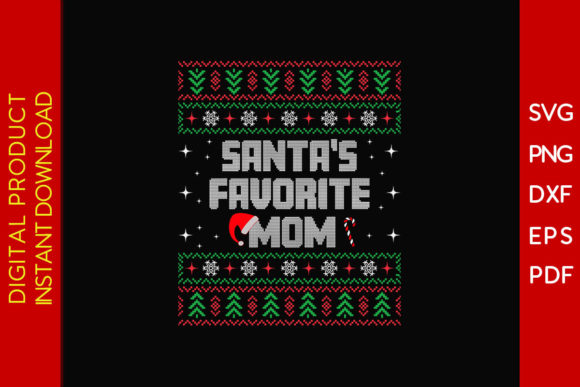
Upon opening the file package, which includes AI, SVG, DXF, EPS, PNG, and PDF formats, the design immediately strikes a balance between playful and nostalgic. The typography typically associated with "Santa's Favorite Mom" themes tends to be bold yet feminine, often incorporating script elements that suggest warmth rather than rigid formality. As a graphics asset, it possesses a clear visual hierarchy that is crucial for embroidery. The shape is generally compact, making it an excellent candidate for left-chest placements on sweatshirts or centered designs on tote bags.
From a designer’s perspective, the mood is undeniably marketable. It targets a specific demographic—moms who love holiday humor—which is a staple for small shop products during Q4. However, because this is originally a cut file, the lines are optimized for blades, not needles. This means the curves are mathematically perfect but may lack the organic flow required for satin stitches. Before loading this into digitizing software, I always assess whether the lettering thickness can support a column stitch without causing fabric puckering or thread breaks.
Real-World Application: The Holiday Sweatshirt Test
To truly evaluate this design, I mentally simulate a real-life production scenario: creating a premium crewneck sweatshirt for a boutique holiday collection. In this context, the Santa's Favorite Mom Christmas SVG serves as the centerpiece of a personalized gift. When adapting this vector art for machine embroidery, I focus on how the design interacts with fleece or French terry fabrics.
In a sweatshirt embroidery project, the fabric texture is thick and has significant pile. If I were to digitize this design using standard running stitches for the text, the stitches would sink into the fabric, resulting in poor definition and a cheap-looking finished product. Instead, this design demands a strategic mix of fill stitches for larger areas and carefully padded satin stitches for the lettering. The goal is to ensure the "Favorite Mom" text sits on top of the fabric nap, maintaining readability and visual appeal. For an Etsy seller, this level of detail distinguishes a professional handmade product from a hobbyist attempt. Customers trust brands that deliver crisp, durable embroidery, and adapting this SVG correctly is key to building that reputation.
Navigating Fabric Limitations and Hoop Sizes
While the design is versatile, it requires careful handling depending on the substrate. Not all fabrics are created equal, and neither are embroidery files derived from cut vectors. Here are specific considerations for using this design across different projects:
- Stretchy Fabrics: When applying this to baby clothes or stretchy knits, the design must be stabilized heavily. Because the original SVG lacks stitch direction data, you must manually map underlay stitches to prevent the fabric from stretching out of shape during the sewing process.
- Small Hoop Sizes: If you plan to use this for an embroidered patch or a cap, scaling down is risky. Vector lines can look substantial on screen but become impossible to stitch at 2 inches wide. Always check the minimum legible size for your specific thread weight before committing to small hoop sizes.
- Textured and Dark Fabrics: On tea towels or dark-colored aprons, contrast is everything. The design’s intricate details might get lost against a busy background. I recommend testing a white or metallic thread version first to ensure the graphic pops. For kitchen towels, consider an applique design variation where the main shape is fabric-backed, reducing stitch density and preventing the towel from becoming stiff.
- Curved Surfaces: Caps present unique challenges. The flat geometry of an SVG does not account for the curvature of a hat. You may need to warp the design slightly in your embroidery software to compensate for the curve, ensuring the text doesn't distort when worn.
Commercial Viability and Brand Consistency
For creative entrepreneurs and digital product sellers, the value of this file extends beyond a single project. It acts as a foundational design asset that can be adapted for various commercial embroidery ventures. However, professionalism lies in consistency. If you are selling this as part of a bundle or using it for client work, ensure the digitized version matches the aesthetic of your other holiday embroidery designs. A disjointed style can confuse buyers and dilute your brand identity.
When listing finished products like custom apparel or holiday gifts online, high-quality mockups are non-negotiable. Use the included PNG or PDF files to create printable mockups that accurately represent the final stitch-out. Buyers need to visualize how the Santa's Favorite Mom Christmas SVG looks on a real garment, not just as a flat digital image. Accurate representation reduces returns and increases buyer engagement. Furthermore, always verify the licensing terms included with your purchase. Just because a file is available for download does not automatically grant permission to sell the digitized embroidery file itself or mass-produce finished items. Respecting intellectual property is vital for long-term success in the craft business community.
Essential Technical Notes for Embroidery Success
Transitioning from a cut file to a stitch file requires diligence. Since the product description specifies formats for cutting machines (AI, SVG, DXF, EPS) and viewing (PNG, PDF), you must treat this as raw art, not a ready-to-stitch pattern. Here is my practical checklist for embroiderers:
- Test Stitch First: Never run this design on a final product without a test sew-out on scrap fabric similar to your project material. Check for registration issues and thread tension.
- Analyze Stitch Density: Cut files often have uniform line weights. In embroidery, variable density is necessary. Adjust column widths so they don’t exceed your machine’s capability or cause needle deflection.
- Select Proper Stabilizer: Match the stabilizer to the fabric, not the design. A tear-away might suffice for a tote bag design, but a cut-away is mandatory for sweatshirt embroidery to maintain stability after washing.
- Check Thread Colors: Digital RGB colors rarely match polyester or rayon threads perfectly. Create a physical thread chart comparison before starting production to avoid disappointment.
- Review Small Details: Inspect any decorative accents or tiny serifs in the SVG. These often need to be simplified or removed entirely for embroidery to prevent bird nesting and thread breaks.
The Santa's Favorite Mom Christmas SVG holds immense potential for makers who understand the translation process between digital graphics and textile art. By approaching this file with technical respect and creative foresight, you can transform a simple vector into a cherished holiday heirloom or a best-selling shop item. Whether you are crafting a personalized gift for a loved one or stocking your Etsy store for the season, success lies in the details of execution. Take the time to digitize thoughtfully, test rigorously, and present professionally, and this design will undoubtedly earn its place in your holiday repertoire.